The Sadets - The mystic Jaraï Kings-Sorcerers
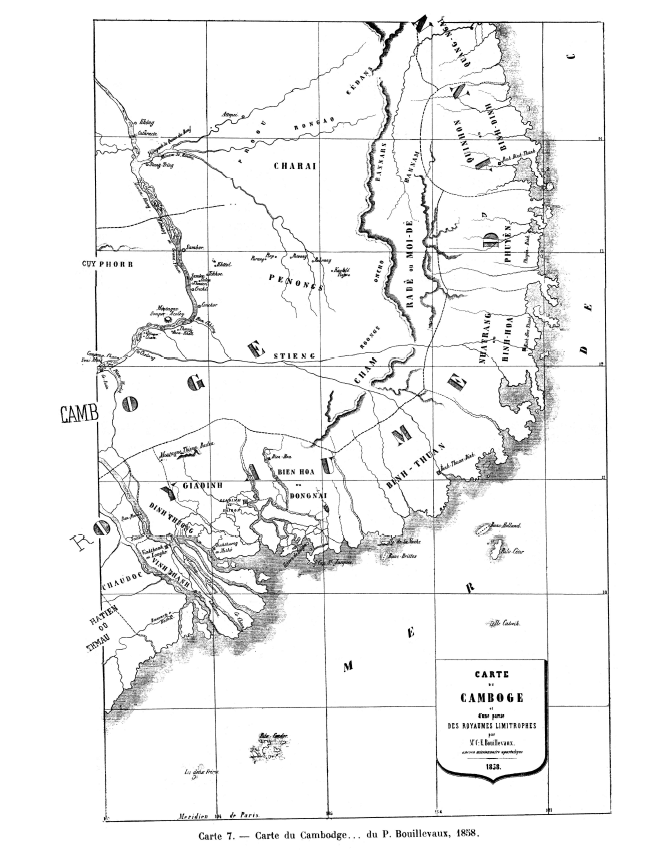
<figcaption>Map of Vietnam’s Central Highlands</figcaption>
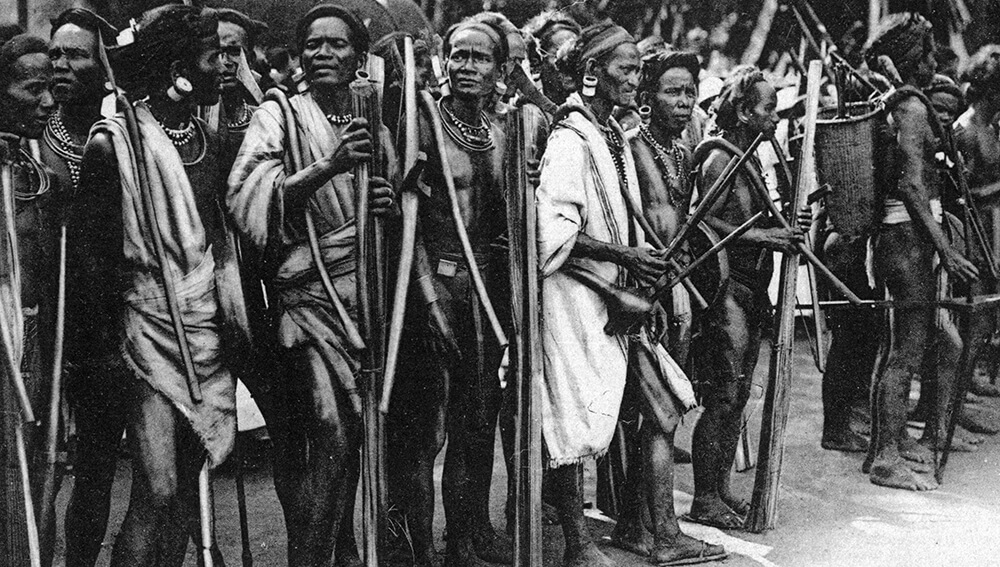
The proto-Indochinese populations, also called the “Montagnards of Indochina,” were the first inhabitants of the area we now know as Vietnam, Laos and Cambodia. In the distant past, these powerful, independent ethnic groups lived isolated in their villages, protected from the outside world by high mountains and impenetrable jungles. The ancestral lands of the proto-Indochinese were portrayed in French Indochinese works such as Jungles moï, Hinterland moï or Pays des Moïs (moï derives from the pejorative Vietnamese word, meaning wild or barbaric). The proto-Indochinese, or Sons of Men as they called themselves, built their lives around all-powerful spirits, never-ending tribal wars, and a rich tapestry of traditions. One group can be traced to the Jaraï, a significant Moï tribe in the Austro-Asian linguistic group that can still be found in Vietnam’s central highlands.
Legends tell of how the Jaraï fought the conquering Cham kingdom with the help of two sorcerer-chiefs (Sadets). The first, the Sadet of Fire – known as King of Fire, Superior King, or King of the East, depending on the region – lived south of the present-day Pleiku in the Ya Ké basin along a tributary of the Ayunpa River, a branch of the Song Ba, the most important river in central Annam. The king was reputed to possess a famous sacred sword that fell from the sky and was recovered after a series of adventures involving the rulers of the Cham, Cambodian, Annamite, Laotian, Rhade and Jaraï tribes. The king used the sword to assert his divine authority over the nearby Moï and Cham peoples and extended his rule to the Khmer kingdom, which possessed the sheath of the famous sword and honored the famed Jaraï ruler with mysterious annual tributes.
The second chief, the Sadet of Water (or King of Water, Inferior King, or King of the West), lived along the Ya Lop, a tributary of the Nam Lieou, a large tributary of the Middle Srepok. He was less famous and influential than his fiery neighbor, possessing only a wooden scepter adorned with precious stones called Tambong Phek. The scepter was said to have the ability to kill anyone it touched; the victim, however, would be resurrected when touched with the scepter’s opposite end. Others claimed that the Sadet of Water held a stone representing the Mak-yang fruit that ripens as the end of the world approaches.
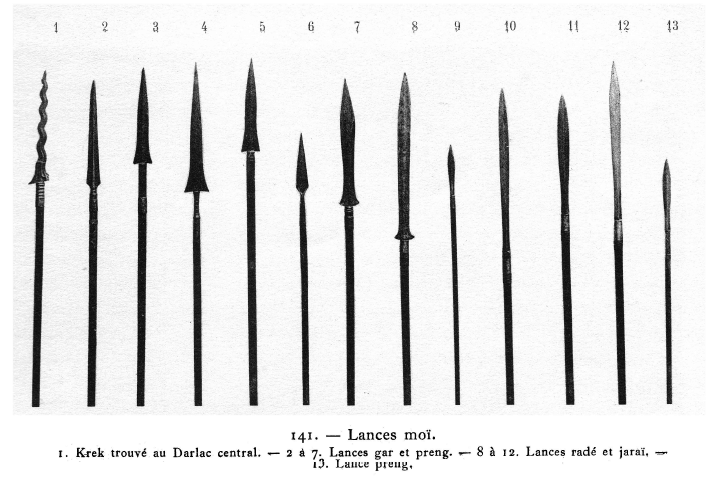
<figcaption>Moï weapons</figcaption>
The influence of these two chieftains waned with the arrival of French settlers at the end of the 19th century and disappeared completely when the Sadet of Water orchestrated the assassination of the colonial administrator and explorer Prosper Odend’hal in April 1904. Odend’hal visited the region on an archaeological and philological mission to establish friendly relations with this dreaded magician in order to pacify the area, which was overrun with bandits. The explorer presented himself at the chief’s village to discuss an agreement, but when he insisted on seeing the chief’s celestial weapon, Odend’hal perished.
<img alt="Moï weapons" src="https://www.secretindochina.com/upload-images/programmes/sadets-the-mystic-kings-of-the-jaraisadets---the-mystic-kings-of-the-jarai/Armes%20mo%C3%AF%202%20(Henri%20Maitre)%20(1)%20(1)-1583486020.png" />
<figcaption>Moï weapons</figcaption>