The Asian Black Bear
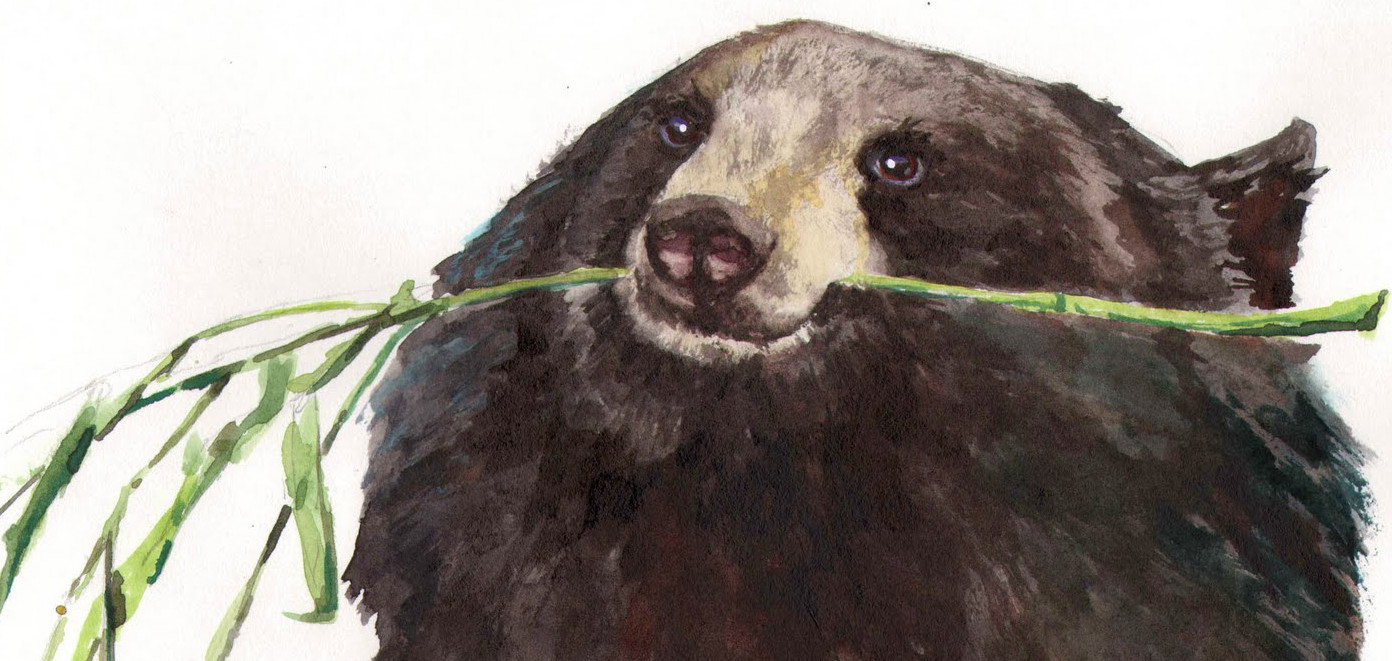
The Asian black bear (Ursus thibetanus) – also known as the Himalayan, Tibetan, or moon bear – is found in Southeast Asia, the Himalayas, and parts of eastern Asia, including Japan. This medium-sized bear, distinguished by the unusual white crest on its chest, is native to Asia and largely adapted to arboreal life. According to Japanese culture, the black bear received its white mark after being given a silk-wrapped amulet by yama no kami (the mountain spirit), which left the mark after being removed. In Hindu mythology, the black bear Jambavantha is believed to have lived from Treta Yuga to Dvapara Yuga. In the epic Ramayana, Jambavantha helps Rama find his wife Sita and battle her abductor, Ravana.
The Asian black bear is a close relative of the reclusive sun bear (Helarctos malayanus), the smallest member of the bear family. Also called the Malayan sun bear or “honey bear,” it takes its name from the bib-shaped golden or white patch on its chest, which legend says represents the rising sun. The sun bear is native to the dense lowland forests of Southeast Asia and parts of China and is found from southern China to eastern India, and as far south as Indonesia.

<figcaption>The Malaysian Sun Bear</figcaption>
The populations of both bears have declined significantly over the past three bear generations, by more than 30%. The trees that make up their habitat are rapidly being lost to deforestation, and wildlife poachers and traders hunt them mercilessly for body parts, fur, and the bile and gallbladder used in Chinese traditional medicine. Some farmers kill the bears on sight because they eat crops such as oil palm, coconuts, and bananas, while adult females are frequently killed so their cubs can be taken and raised as pets.
As a result of the alarming decline in the bear population, sanctuaries have emerged throughout Southeast Asia where bears find rehabilitation, food, living space, enrichment activities, medical provisions and quality care.
Animals Asia established the Vietnam Bear Sanctuary in Tam Dao, Vinh Phuc province in 2006 to promote compassion and respect for all animals and to end the barbaric bear bile trade. The sanctuary is spread over 11 hectares, with almost 30,000 square meters of semi-natural outdoor enclosure space designed to stimulate the bears’ natural behaviors.
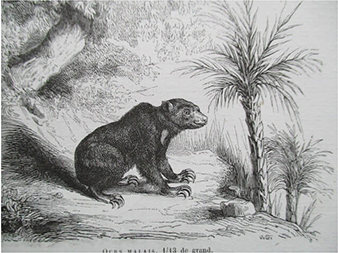
<figcaption>Sun Bear</figcaption>
Animal lover Mary Hutton started the Free the Bears charity from her family home in Perth, Australia, via local petitions and raffles in 1995. Today, the Free the Bears Fund provides lifelong care to over 220 rescued bears across five sanctuaries and supports over 300 rescued bears in India. One of the sanctuaries, the Cambodian Bear Sanctuary in Phnom Tamao, is home to the world’s largest group of rescued Malayan sun bears and numerous Moon bears. In 2003, in collaboration with the Laos Department of Forestry, the Tat Kuang Si Bear Rescue Center began construction deep in the forest near the famous waterfalls. It was followed by a rescue center in Cat Tien, Vietnam in 2008. Construction of additional rescue centers in both locations is currently in progress.