Upper Xekong - Laotian small Amazonia
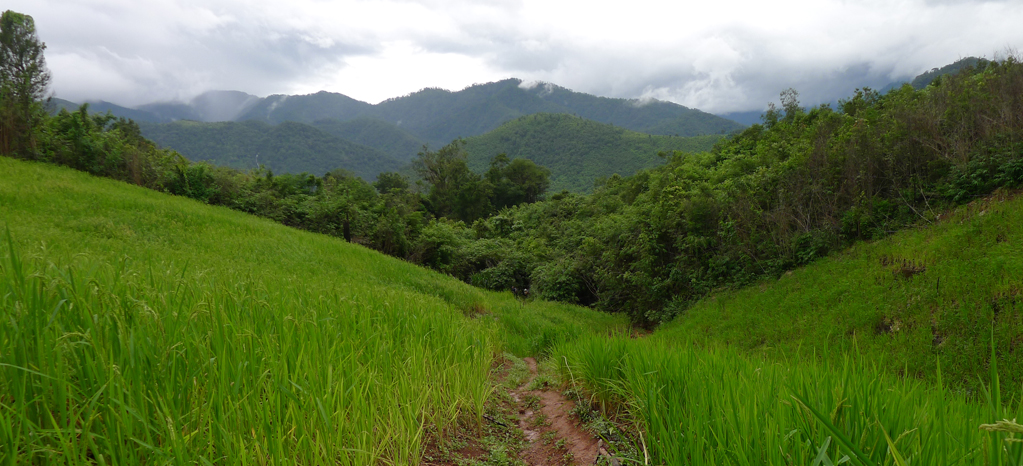
Upper Xekong is located in southern Laos, in an Annamese cordillera occidental meander constituted of rugged landscape, long southward oriented mountain ridges, profound valleys, impetuous rivers, uninhabitable forests and mythical groves: a wild land forming a natural obstacle to the world uncertain influences, an unseen Laotian small Amazonia, lost paradise of some southern Proto-Indochinese Katu clans.
During colonial times, Upper Xekong is unknown, unexplored, inaccessible, inexplorable, locked, feared, a tâche-blanche, known as Blood hunters land. In 1938 Colonial France finally subdued and ephemerally governs, a year later a fierce armed revolt ensued and the region re-collapse into darkness. During Indochinese wars, Upper Xekong converts in an NVA maquis, essential part of the Hô Chi Minh Trail, consequently severely bombed by USAF and in parallel impacted by American secret war undercover operations. Oddly the legendary region persisted sealed until recently per development-management projects appearing in its southern part. Between 2011 and 2015, Secret Indochina production department has leaded various surveys in its heart, consequently has created special ethnographic and adventure programs amongst Katu people.