The Domain - a Vietnamese last frontier
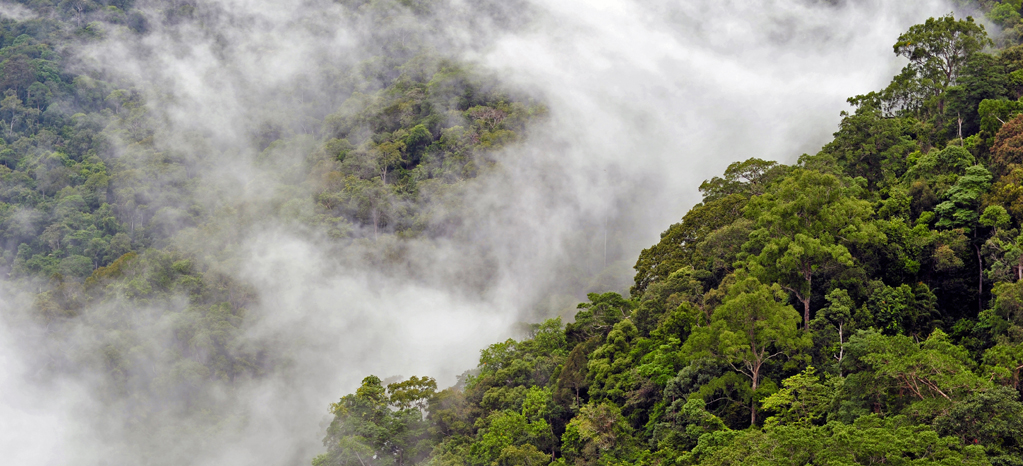
In 1950 all French Indochina was completely explored, mapped, resisting tribal strongholds were submitted, authoritatively controlled and administrated. All, expect Cau Maa’ confederation heart, a rugged mountain range located inside the boundless loop formed by Daa’ Dööng river (Dong Nai), only two hundred kilometers north of Saigon and, paradoxically, impenetrable, impalpable, uncontrollable; a last frontier caught in the night of time, locally known as Nggar Yang, the Domain of the genies. In olden times the region remained sacred for southern Proto-Indochinese’s and Proto-Chams groups, considered as ancient’s gods genesis, as a celestial residence outlawed to uninitiated souls. The land was worshiped for her exceptional forestry formations on mid-altitude basaltic sols, for her own peculiar, for some spectacular natural wonders formerly believed to be inhabited by wood denizens and others intriguing divinities. Maa’ Huong, stern, impressive and unpredictable combatants were the consecrated guardians, hostiles to French expansionism and devoted to protect the holy forest mighty heart.
Since 1882, all officials explorations were doomed to failure, unfortunate colonial personals and their dubious escorts wandered through gloomy forests, deepened inside endless wilderness, navigated on erratic waters: ambiguous solitudes secretively allied with the dreaded guardians, specters of ambush and slaughter. Therefore the region became a myth, termed as explorer tomb, reversed-jungle, back-jungle and rebel hinterland, the depths of Vietnam woodland world.
Nevertheless, ethnographer Jean Boulbet managed to settle an alliance with the Coop’s, a Cau Maa’ sub-group, in 1952 he was finally the first allowed foreigner to enter, explore, then until 1963 to study the Domain. The entity promptly reclosed during the Vietnam wars, transformed in a NVA maquis, then, after 1975 vanished from the collective memory.
In the late 1990s, Nicolas Vidal, Secret Indochina vice-president decides to re-discover the myth. After bibliographic researches and numerous pre-surveys, in May 2015, in collaboration with Francois Bouvery, co-founder of Ta Lai Longue House, a first reconnaissance approaches the southern border; in April 2016, a second mission surveys the center. Most of the Domain edges vanished, oddly, several center parts have persisted unseen, a miraculously untouched, immaterial and timeless sanctuary. Henceforth located in southern Lam Dong province, the remaining center is constituted by an ensemble of sinuous ridges, shadowing narrow vales, ancestral groves, primeval forests shreds, sea’s of bamboo forest, solitary ponds and meandering streams. Grassland areas cover central Laac Ddang Yaang (Spirit Highs) domes and other bucolic meadows; some hills such as the Ddang Klaa (Tiger Highs) are covered by majestic undergrowth’s composed of dacriodes, swintonias (riol), arborescent byras, bombax (blaang), banyans, dipterocarpus alatus, hopeas odorata, giant tree ferns, palm trees and others specimens.