The Plain of Jars
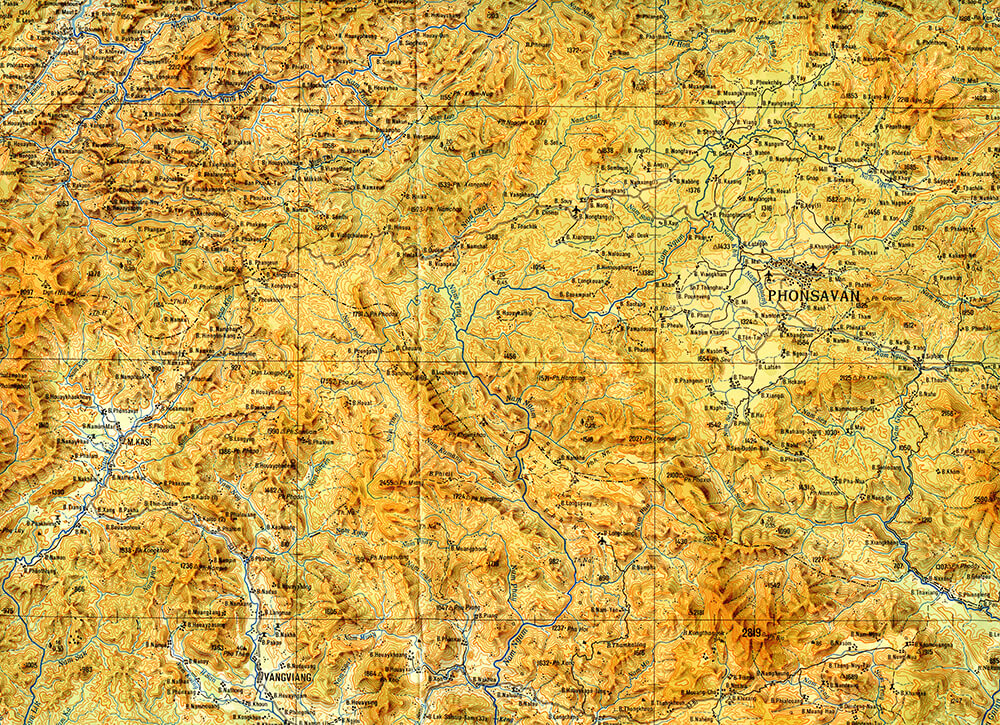
<figcaption>Phonsavan Map</figcaption>
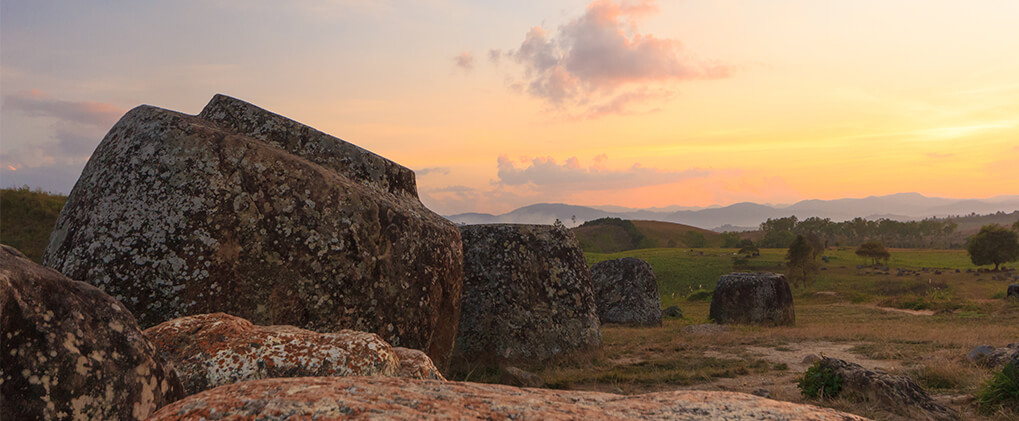
Upper Laos – Northeastern Laos, Houaphan and Xieng Khouang provinces – is one of the most mysterious regions in Indochinese Peninsula. This is a long-isolated land of shining limestone ranges, vast forests, and mighty rivers. It is known for the ancient megalithic civilization that has left a treasure trove of jars, funeral stones, monoliths and menhirs scattered across the land, as well as the mysteries surrounding certain episodes of the American Secret War in Laos.
From 5,000 B.C. and 800 A.D., the region was ruled by an enigmatic Proto-Indochinese megalithic civilization, most likely Khmuiques (Austroasiatic). Researchers believe that it was at the center of a vast trade network, allowing the emergence of a flourishing protohistoric civilization that venerated monoliths, menhirs, tumulus, cairns, sacred stone circles and other artefacts similar to other megalithic civilizations in Arabia, Africa, Europe, and Northern and Southern America.
<img alt="Site 2" src="https://www.secretindochina.com/upload-images/programmes/plain-of-jars/Plain-des-Jarres-SITE-2---9--HDR_resized-1585213718.jpg" />
<figcaption>Site <span class="numbers">2</span></figcaption>
An opulent city likely stood not far from Bang An (Phongsavan Site N1), a wooden ephemeral city where princes and slaves built monoliths and jars, and tirelessly fashioned argil, sandstone, and granite. Today, jars and stone fields can still be found in various places on the Tra Linh plateau at the center of the region and beyond – along the Nam Khan and Nam Ngum Rivers, on high ridges, along ancestral trade routes, on the sides of Phu Bia mountain, the Isarn plateau, and in Northern India.
There are various theories for how the jars were used, including as rice storage or fermentation tanks. Most likely, they served as monolith funeral urns, receptacles for cremated remains, or a means of decomposing bodies. The jars were made of various materials: sandstone, limestone, schist, granite, and a long-forgotten composite of crushed stones, sand, clay and honey. They were a range of sizes and weight, varying from 600 kg to six tonnes.
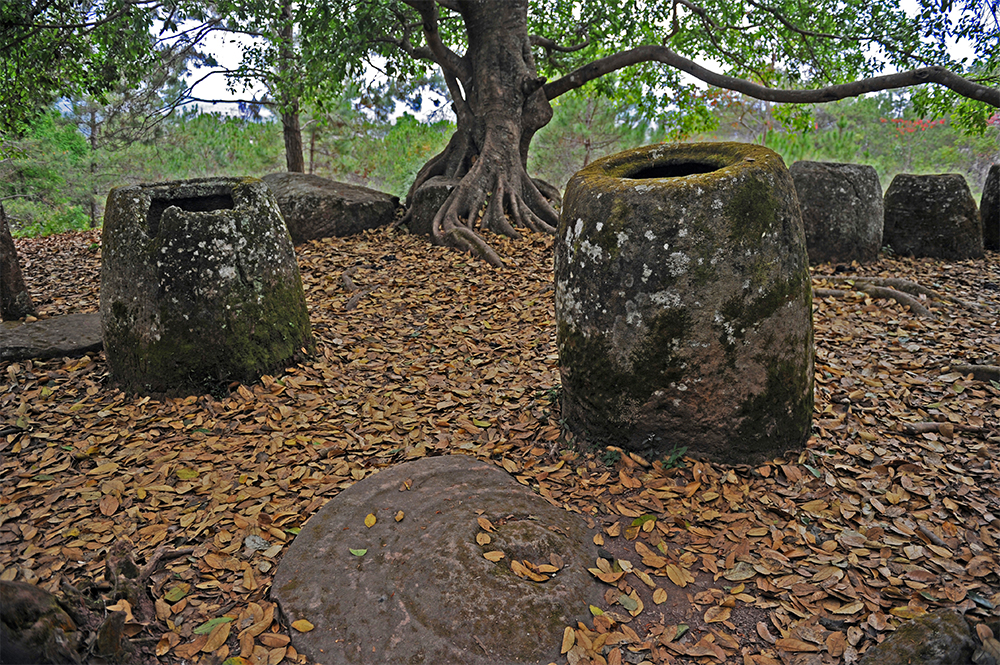
<figcaption>Site <span class="numbers">2</span></figcaption>
Upper Laos can be explored from Vietnam and Pu Long, Luang Prabang or Vientiane. The most notable sites are N1‑2 – 3‑16 – 23-25 – 52, the stone fields of Hintang (Sankongphan and Keohintan), and Lima Sites 85 and 20A.
<img alt="Site 52" src="https://www.secretindochina.com/upload-images/programmes/plain-of-jars/Site-52-resized-1585214416.jpg" />
<figcaption>Site <span class="numbers">52</span></figcaption>